 Gene Gallin, Unsplash
 A $1 million NIL deal sounds like a million dollars. Then the tax bill shows up, and suddenly it’s a lot less than a million dollars. As many athletes have learned the hard way, the headline number and the take-home number are not the same.
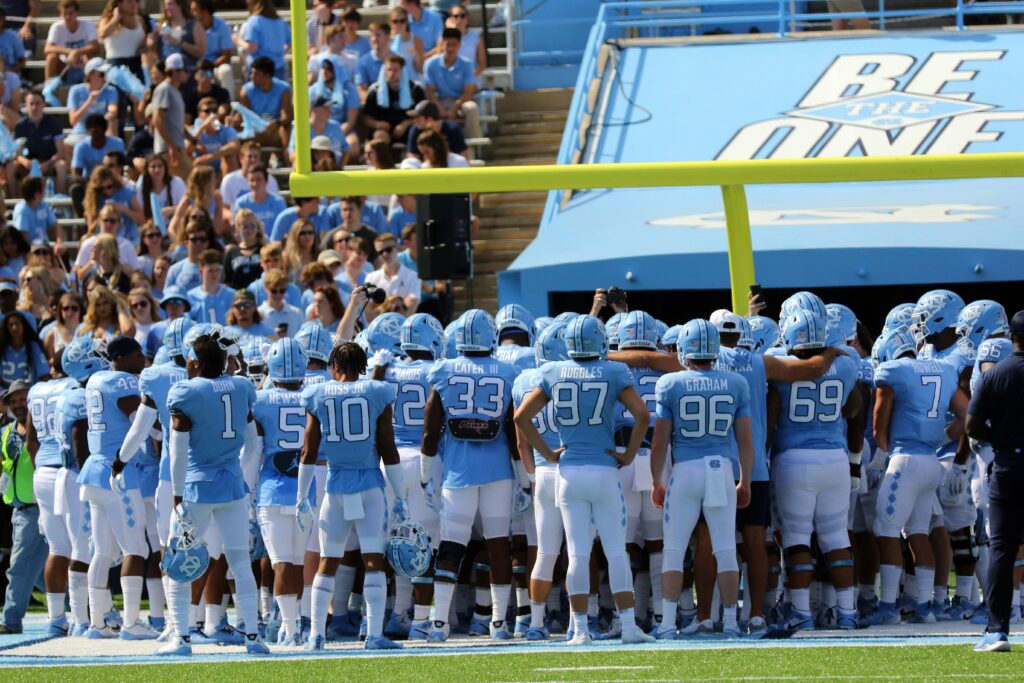
A recent tax breakdown lays out just how much of that money a UNC athlete would actually keep. Based on 2025 federal and state income tax rates, it walks through a hypothetical $1 million NIL payout for a UNC football player: roughly $270,000 to the federal government and another $42,500 to North Carolina. All told, that’s about $329,390.60 in taxes—leaving him with closer to $670,608.39 of the original payout.
But it’s a useful reminder to athletes that they don’t get to take the full amount home.That’s still a big number, but it’s a useful reminder to athletes that they don’t get to take the full amount home. And as these deals continue to grow, it makes one wonder: how much of that money does the athlete really keep?
Where his schedule takes him is a big factor in determining this.
There’s a real possibility that states begin applying something similar to the “jock tax” already used for professional athletes. After all, when the Carolina Panthers play a road game in Atlanta, Georgia can tax the income tied to that game. There’s no reason for the government to treat college athletes any differently.
Divide that $1 million across a 12-game football season, and each game works out to about $83,333. For this UNC player, road games might include stops at Pittsburgh, Clemson, UConn and Virginia. Each state would take its share: roughly $2,558 in Pennsylvania, just under $5,000 in South Carolina, about $4,583 in Connecticut, and close to $4,750 in Virginia—a combined $16,900 or so in additional state taxes, with South Carolina accounting for the largest bill.
Now compare that to a UNC basketball player earning the same $1 million, spread across a longer, 33-game season. That works out to about $30,300 per game. This schedule includes road trips to Utah, Kentucky, Georgia, California, Virginia and New York, along with stops in Florida and Texas: two states with no state income tax.
Because of that mix, the basketball player’s additional state tax burden ends up lower, around $9,000. Once federal and North Carolina taxes are factored in, his total bill comes out slightly smaller than the football player’s, meaning he keeps a bit more of the original $1 million.
The difference isn’t a special tax advantage for basketball players, it comes down to scheduling. Spending more time in states without an income tax simply means keeping more of the money.
Spending more time in states without an income tax simply means keeping more of the money.The real question athletes should be asking when they sign these deals: not how large the number looks, but how much of it they’ll actually keep. That depends on several factors: taxable income, deductions, credits, residency, how the NIL agreement is structured, and which states are involved.
NIL compensation also differs from a traditional scholarship in that it’s treated as taxable income, and when an athlete’s activities span multiple states, the tax picture only becomes more confusing.
Overall, the number attached to an NIL contract is not the take home amount athletes get. What ultimately reaches the athlete’s bank account is often considerably smaller. For all the attention NIL deals get, taxes remain a constant that no athlete can negotiate away.
Reagan Allen is the North Carolina reporter for the James G. Martin Center for Academic Renewal.
Author
Reagan Allen