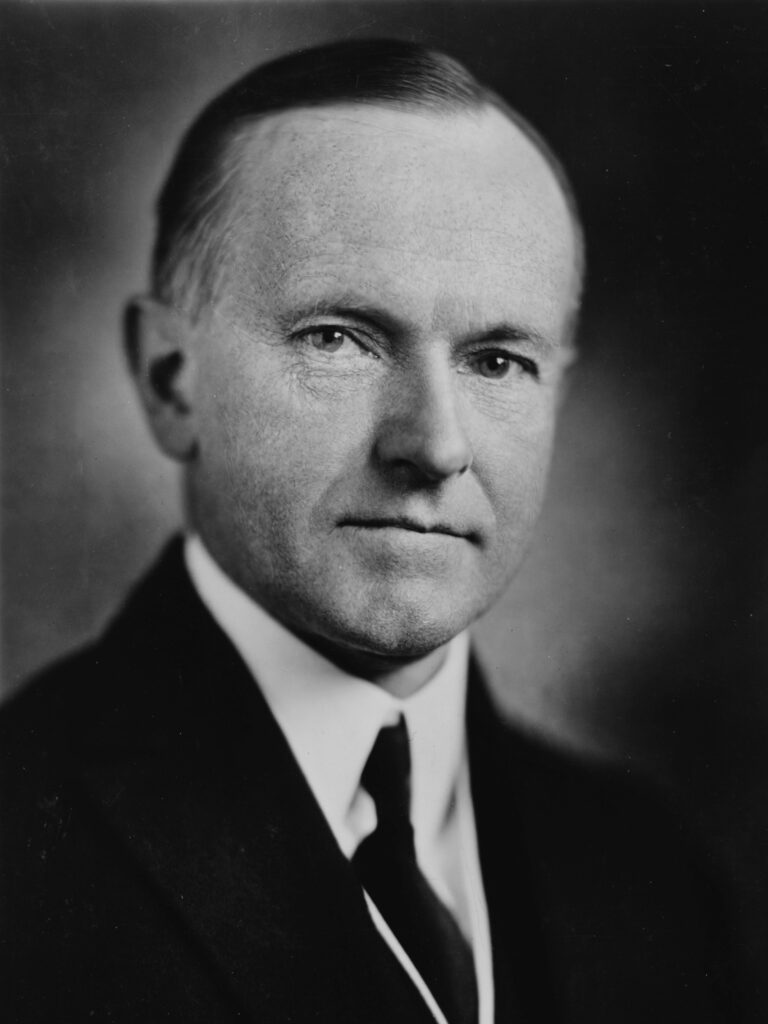
Once upon a time, an American president declared, “It is perfectly apparent that the needs of education were never greater than they are at the present time.” But it was not President Trump. It was President Calvin Coolidge. Over one hundred years ago, Coolidge recognized the critical need for robust civic education to foster a healthy republic.
Coolidge’s words are truer today than when he spoke them as vice president in 1922. In September 2026, the Annenberg Public Policy Center at the University of Pennsylvania published its Constitution Day Civics Survey. The results could hardly be more concerning.
The survey found that one-third of Americans cannot name all three branches of the federal government.The survey found that one-third of Americans cannot name all three branches of the federal government and only a small percentage of respondents can name First Amendment protections beyond freedom of speech. The Center’s director called such ignorance “costly.”
Yet, UNC’s School of Civic Life and Leadership (SCiLL) offers hope. The school seeks to educate “citizens and leaders for constitutional self-government” and equip students to “live with purpose in a pluralistic American democracy.” This mission perfectly aligns with Coolidge’s century-old emphasis on the need for a civically informed citizenry.
Coolidge, College, and the Constitution
In his Autobiography, Coolidge praised his Amherst College professors for teaching the great tradition of Western Civilization. He discovered the ancient Greek and Roman foundations of democracy and liberty, writing, “Something of the sequence of history was revealed to me, so that I began to understand the significance of our own times and our own country.”
One course in particular taught Coolidge “good citizenship and good government…[and that] those who took it came to a clearer comprehension not only of their rights and liberties but of their duties and responsibilities.” For Coolidge, a college education’s chief public purpose was to impart civic knowledge and form responsible citizens.
In his context and ours, the Constitution provides the foundation for applicable civic knowledge. Coolidge believed “no other document devised by the hand of man ever brought so much progress and happiness to humanity.” However, the Constitution Day Civics Survey reveals that today’s citizenry severely lacks both the understanding of and appreciation for this great document.
Continuing Coolidge’s emphasis on forming constitutionally attuned citizens, SCiLL aims “to renew higher education’s public purpose—educating citizens who not only understand the freedoms our Constitution guarantees, but who also have the courage and capacity to use those freedoms well.” Few exceed Calvin Coolidge in using freedom well. He is an exemplar of civic knowledge transformed into humble civic leadership.
Coolidge, College, and Civic Leadership
When speaking at his alma mater, Coolidge proclaimed that, “Civilization depends not only upon the knowledge of the people, but upon the use they make of it. If knowledge be wrongfully used, civilization commits suicide.” In other words, correct civic knowledge enables virtuous civic engagement but does not guarantee it.
Coolidge highlighted two essential elements of virtuous civic leadership: clear thinking and tolerance. He claimed that “the chief purpose of education is to teach man to think.”
As Coolidge advised students in 1919, today’s citizens must also pursue clear thinking. SCiLL prepares students to accomplish both of Silent Cal’s goals. Jed Atkins, SCiLL’s director and dean, desires “graduates who can think clearly, engage disagreement, and lead with purpose in a pluralistic democracy.” Thinking clearly not only requires willingness to engage with new ideas, but also the ability to honestly wrestle with ideas one’s gut identifies as objectionable.
SCiLL’s promotion of free inquiry in a pluralistic democracy promotes the tolerance Coolidge endorsed.SCiLL’s promotion of free inquiry in a pluralistic democracy promotes the tolerance Coolidge endorsed. In one of his most famous speeches, Toleration and Liberalism, Coolidge defined toleration as “a liberality of mind, which gives to the opinions and judgements of others the same generous consideration that it asks for its own.” He then highlighted the practical value of tolerance: “Progress depends very largely on the encouragement of variety. Whatever tends to standardize the community, to establish fixed and rigid modes of thought, tends to fossilize society.”
Both “violent agitation” and the “welter of partisan politics” disrupted healthy civic leadership and progress in Coolidge’s era. How much more pronounced is such disruption in our day!
Today, higher education faculty, largely on the political left, too often discourage the liberality of mind and variety Coolidge praised. Schools of civics, such as SCiLL, offer necessary counterweights to the dominant views on campus. They encourage variety and avoid a stiflingly standardized academic community.
Conclusion
SCiLL does more than promote Coolidge’s perspective on civic education. The school trains students to effectively lead our country into the future. A constitutionally faithful and vibrant United States of America requires civic-minded leaders in the great tradition of Coolidge.
Coolidge addressed the heart of the matter, writing, “we can make progress politically and socially, not by a disregard of those fundamental principles which are the recognized, ratified and established American institutions, but by their scrupulous support and observance. American ideals do not require to be changed so much as they require to be understood and applied.”
The need for quality civic education was never greater than in 2026. Coolidge’s wisdom and SCiLL’s good work provide a guide to meet the educational needs of our students and our country.
Jonathan Lawler is the Archivist and Digital Collections Manager at Southeastern Baptist Theological Seminary and is a Hazlitt Fellow with the Foundation for Economic Education.
Author
Jonathan Lawler