
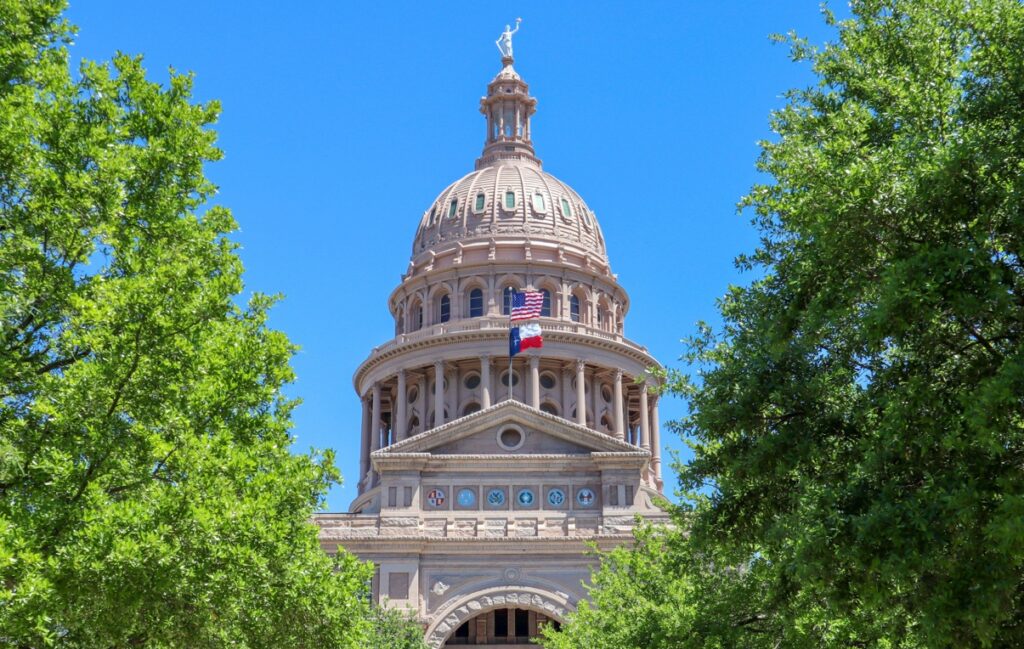
 Clark Van Der Beken, Unsplash
 The Lone Star State has done something rare, new, and needed: It has given its anti-DEI statutes teeth. As of January 9th, students, faculty, and university employees can now report violations of Senate Bill 17, a 2023 statute banning all Diversity, Equity, and Inclusion (DEI) practices, to a complaint portal at the State Office of the Ombudsman’s website. A dropdown menu lists the six possible areas where Texas colleges and universities might sneak in DEI measures, ranging from the curriculum to hiring processes. Non-student citizens can use a separate portal to provide unofficial feedback and complaints.
According to the complaint-process outline, if an investigation concludes that an institution has broken SB 17, that institution has 180 days to comply before the issuance of a report to the ombudsman and the state auditor registering noncompliance. The state can then withhold funding from that college or university. The message is clear: Obey or lose state dollars.
The legislature’s message to Texas’s public universities is clear: Obey or lose state dollars. Texas also strengthened its campaign against DEI by passing SB 37 in 2025, a measure that shifts hiring- and curricular-approval authority from faculty to the governor-appointed Board of Regents. This board is already wielding its power. In February, it unanimously approved a rule requiring professors to “fairly present” clashing viewpoints and change course requirements that force students to study “unnecessary controversial subjects.”
Universities and faculty have dug in their heels against Texas’s laws, and the state has been forced to intervene. Texas’s strong push against DEI has caused the usual uproar among faculty unions. In a press release, the state’s chapter of the American Association of University Professors (AAUP) professed fear of an “unprecedented Big Government intrusion into the freedom to learn, teach, and research” and suggested that the complaint-portal process is “ripe for abuse.” Texas faculty also expressed concerns that the Office of the Ombudsman will operate like “thought police,” stamping out honest classroom conversations and incentivizing universities to bow down to the governor’s office.
To these objections, only one reply can suffice: Texas progressives are responsible for this escalation. Though countless articles and reports have proved that DEI lowers educational quality and harms the very students whom the philosophy proposes to help, much of American academia refuses to dismantle DEI’s identity-based regime.
In many cases, schools have merely shifted diversity bureaucrats to different departments or changed DEI offices’ names. And while Texas law bans DEI bureaucracy, classes promoting DEI and identity politics still abound. Texas A&M, for instance, still offers a “Certificate in the Psychology of Diversity” and retains a “Diversity Science” research cluster. Texas State University offers a minor in “Diversity Studies.” UT San Antonio students can major in “Equity and Education.” Actual change is scarce.
If we cannot expect colleges to obey SB 17, the easiest way to enforce it is to make enforcement easier. Texas has done just that with its new oversight office and complaint portal. Students and other whistleblowers will not have to fear injustice from a biased internal-investigation process that exists to protect faculty. Any such internal games will likely cease when the ombudsman is in charge and funding is on the line. Texas is showing resistant colleges that it means business.
This is new territory for both the state and Texas’s university systems. Both advocates and enemies of SB 17 worry about government overreach and the dangerous precedent that this strong move may set. Yet the step is necessary. Grassroots change starting within universities would certainly be the best solution for both parties. And, indeed, reformers should always use the lightest measures possible to effect positive change, lest they compromise the very institutions they wish to improve. But, right now, the Office of the Ombudsman is the only effective solution. Universities and faculty have dug in their heels against Texas’s law, and the state has been forced to intervene.
For now, institutional reform in higher education must start with strict legal measures.
Keller Moore was a 2025 Carolina Cardinal fellow at the James G. Martin Center for Academic Renewal.
Martin Center content may be reproduced with permission. Please write to republish@jamesgmartin.center. All republished articles should include our reporter’s byline and must prominently name the Martin Center as the original publisher.
Author
Keller Moore
