
 Andy Feliciotti, Unplash
 Shortly before Donald Trump’s second inauguration, I summarized for the Martin Center the possible reforms to collegiate accreditation his administration might adopt. I divided these conservative reforms into three broad groups: anti-DEI measures, outcomes-based reforms, and elimination of accreditors’ role as “gatekeepers” of Title IV tuition aid.
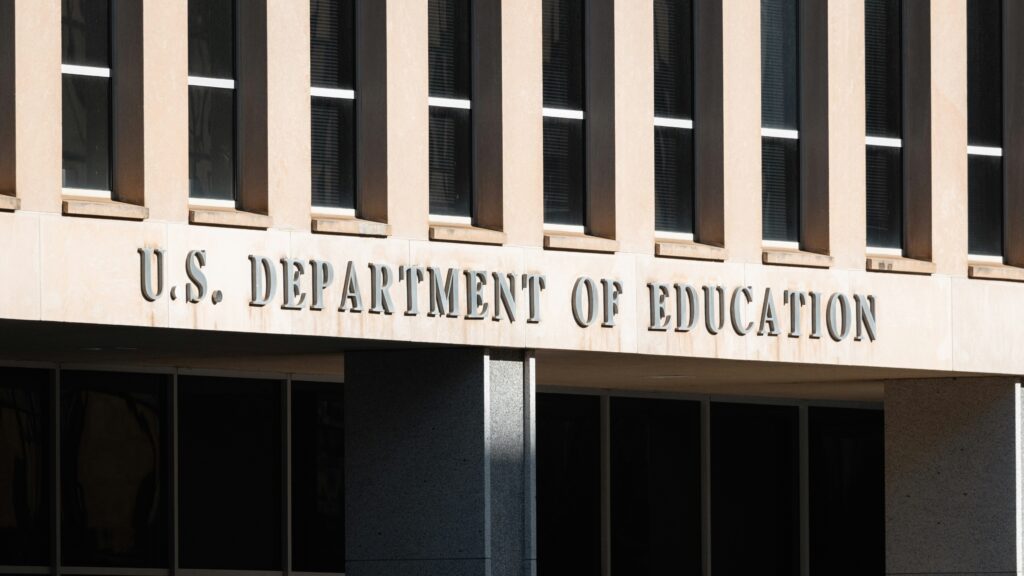
The U.S. Department of Education recently concluded its “Accreditation, Innovation, and Modernization (AIM) negotiated rulemaking” process. The results are predictably less sweeping than Trump’s campaign rhetoric promised, but largely follow the lines he drew then and in his subsequent executive order. I will briefly summarize the newly approved rule changes under those same three headings.
Anti-DEI Measures
As I wrote in The Chronicle of Higher Education, the recent executive order, Education Secretary Linda McMahon’s “Dear Colleague” letter, and the SFFA ruling itself, all reflect the same constitutional principles. Together, they embody “the conservative movement’s enduring consensus that America’s constitutional order is and ought to be colorblind.”
Together, they embody “the conservative movement’s enduring consensus that America’s constitutional order is and ought to be colorblind.”I also warned in my Martin Center piece that however impeccable their legal merits, such reforms “risk setting dangerous precedents” if future Democratic administrations respond in kind on the basis of the Left’s faulty race-conscious jurisprudence.
The Trump administration’s new rules prohibit federally-recognized accreditors from adopting any standards or policies that direct institutions to violate state or federal law granting “any preferences on the basis of race.” Accrediting agencies must also demonstrate that institutions:
- “Fulfill their obligations under the First Amendment to the Constitution,” and that “academic freedom protections” are applied consistently without reference to “race or other immutable characteristics, viewpoint, or ideology.”
- “Maintain the integrity of research and scholarly activity” with appropriate anti-plagiarism policies—what we might provocatively term the Claudine Gay rule.
- Review and revise “instructional staffing in response to material changes in student demand, program viability, or financial conditions”
Such rules are meant to incentivize accreditors—and the federal tuition aid they unlock—to discourage race-conscious policies, to enable removal of unpopular critical studies programs of dubious scholarly merit, and to protect and encourage dissenting ideological viewpoints on America’s campuses. These are laudable ends, but how effective will the rules prove in practice?
Regulating the “Gatekeepers”
Long-term success seems more likely in attempts to diversify the accreditation marketplace. This is done by reducing the time required for the Secretary of Education to recognize new accreditors. Prior to 2019, the six largest agencies enjoyed regional monopolies. The federal government has now prohibited such monopolies. Further, institutions may have multiple accreditors at once, permitting them to switch agencies without hazard to the Title IV aid access their existing accreditor provides.
The federal government has also eliminated various other roadblocks to institutions moving accreditors. Taxpayer and consumer accountability is increased by expanding the Secretary of Education’s power to review and rescind agencies’ recognition for non-enforcement of standards. Institutions also gain greater rights of appeal against disciplinary actions, including protection from punishment for adhering to a publicly stated religious mission.
This is all standard “supply side” logic. Greater competition for institutions’ business should encourage accreditors to increase cost-effectiveness and reduce burdens. While these potential gains are unlikely to be transformative, they are nevertheless more likely to endure than the anti-DEI measures.
While these potential gains are unlikely to be transformative, they are nevertheless more likely to endure than the anti-DEI measures.Outcomes-based reforms
Finally, the new rules require institutions to demonstrate that “grades meaningfully reflect student learning and support progression through the program of study,” and report data on “educational and economic returns relative to the total cost of attendance.” The intent here is to combat the grade inflation crisis endemic even at elite colleges, and to defund degree programs that do not increase graduates’ earning power relative to incurred debt.
Limiting institutions’ latitude to refuse credit transfers from other accredited institutions and prohibiting accreditors from “restricting innovative or lower-cost [educational] models” such as reduced-credit three-year degrees also increases students’ consumer choice. In theory, students should be freer to choose from a wider array of options, potentially injecting downward price pressures in the higher-education market. This seems unlikely when rising tuition costs have outpaced average inflation consistently for more than fifty years.
Accreditation is at best an indirect means of policymaking. Federally recognized accreditors have some latitude in how they transpose these rules into the policies colleges and universities actually follow. In all three areas outlined above, the Trump administration’s reform agenda will be mediated through agencies that may not share all—or any—of its goals.
Samuel Negus is director of program review and accreditation at Hillsdale College.
Author
Samuel Negus
