
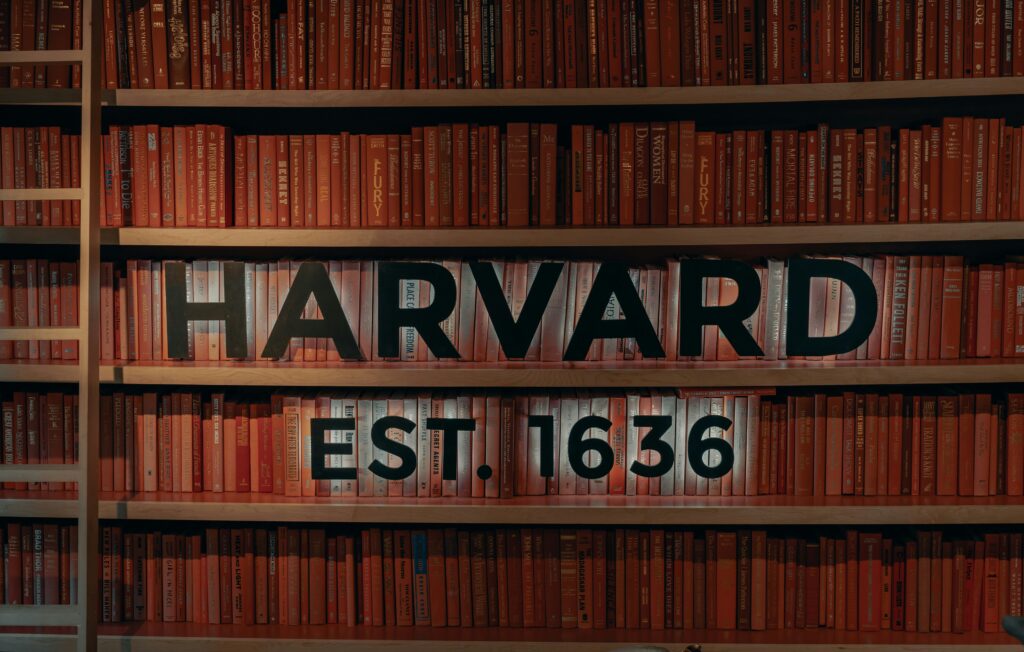
 Clay Banks, Unsplash
 Following the Hamas assault on Israel in October 2023, many American campuses erupted in turmoil—not due to the brutality of the attack, but in support of the Palestinian cause. In the minds of many American students, professors, and administrators, the Israelis are the aggressors and “had it coming.”
Anyone who expressed support for Israel was apt to be harassed or even assaulted by pro-Hamas zealots. Jewish students were singled out for vituperation and taunts like “From the River to the Sea, Palestine will be free!” indicating a desire to see Israel wiped off the map. Encampments sprang up as activists sought to spread their message by disrupting campus life.
How did the leaders of prominent universities respond? Most did nothing to stop the unrest on campus while crafting public statements intended to show that they believe that there’s moral equivalence between the factions in the Middle East. What they hadn’t considered was the possibility that they would be called before Congress to explain themselves.
What they hadn’t considered was the possibility that they would be called before Congress to explain themselves.On December 5, 2023, the U.S. House of Representatives Committee on Education and the Workforce held a hearing at which the presidents of Harvard, Penn, and MIT were asked about their responses to the turmoil. Most prominent among the committee members in probing the thoughts of the three leaders was Representative Elise Stefanik of New York, herself a Harvard graduate.
She has now written a book about that hearing and the general decline of American higher education, Poisoned Ivies. It strongly reinforces the view that the nation’s colleges, especially those once regarded as “elite,” have been taken over by people whose concern for education extends only to the ideas they favor—people who are hostile to the nation’s traditions, to academic standards, to the civil exchange of views, and who insist on using higher education to indoctrinate young minds.
In that “hearing heard around the world,” Rep. Stefanik asked Harvard’s president, Claudine Gay, “Does calling for the genocide of Jews violate your university’s code of conduct?” Her answer: “It depends on the context.” The two other university presidents, Liz Magill of Penn and Sally Kornbluth of MIT, gave similarly equivocal replies. As Stefanik writes, “Across all three campuses, terrorist-sympathizing students and faculty were calling for the eradication of Jews at home and abroad. That was the ‘context.’”
While the three presidents probably felt that they had done splendidly with their lawyerly evasions, a great many Americans thought otherwise once they saw and read that those academic leaders could not give straight answers on simple questions about antisemitism on their campuses. Even some “progressives” were shocked. Harvard law professor Lawrence Tribe, for example, wrote that Gay’s “hesitant, formulaic, and bizarrely evasive answers were deeply troubling to me.”
Almost immediately after the hearing, Harvard alumni began petitioning for Gay’s removal. Her subsequent statements meant to “explain” her comments only served to deepen the impression that she was not fit for her position. Then, some researchers discovered extensive plagiarism in several of her (shockingly few) academic writings. The chagrined Harvard Board voted to remove Gay from the presidency, but she remains on the faculty at a lofty rate of pay.
Under pressure from important alumni and large donors, Penn’s board also fired Liz Magill.
But violence and turmoil continued on campuses including Harvard, Penn, and especially Columbia into 2024. The Education and the Workforce Committee had wanted Columbia’s president, Minouche Shafik, to testify at the December 2023 hearing, but she chose to instead go on a junket to participate in a conference on climate change in Dubai. Columbia had suffered outrageous vandalism and violence, including an incident where two janitors were entrapped in a building when masked anti-Israeli activists broke in. The janitors feared for their lives until finally being rescued the next day.
Rep. Stefanik wanted to hear what Shafik would say in defense of Columbia’s handling of the campus turmoil and the terrible treatment of Jewish students and faculty members.Rep. Stefanik wanted to hear what Shafik would say in defense of Columbia’s handling of the campus turmoil and the terrible treatment of Jewish students and faculty members. She was particularly intent on questioning Shafik about the evident double standards that prevailed at Columbia: “Those who attack Jewish students are treated with kid gloves and allowed to remain in positions of privilege and influence. But those who stand up for the civil rights of Jewish students are bullied—then accused of being the bullies, suspended, canceled, and driven out.”
Minouche Shafik came well prepared for the hearing. Columbia had hired experts to coach her on how to answer questions from the committee members. But even with that preparation, her appearance was as disastrous as those of the other presidents. Shafik equivocated on the university’s standards of expression and conduct, and even at one point denied that there had been any anti-Jewish activity on campus.
After the hearing, many Columbia alums and donors called for Shafik to resign, which she did in August 2024.
Poisoned Ivies also covers the nasty events following the Hamas attack at other schools, including Yale, Princeton, Brown, Cornell, Northwestern, and Cooper Union, leaving no doubt that the contagion of antisemitism is widespread.
Representative Stefanik then turns her attention to the key question—what has gone wrong with our colleges and universities? Her analysis is penetrating.
That is the point of the clamor for “Diversity, Equity, and Inclusion” and Critical Race Theory that students now find hard to avoid in their studies.For one thing, most have succumbed to the left’s “long march through the institutions” and now employ huge numbers of faculty and administrators who see their jobs as “change agents” to foment opposition to America’s traditions in the minds of students. That is the point of the clamor for “Diversity, Equity, and Inclusion” and Critical Race Theory that students now find hard to avoid in their studies. At the same time, courses that uphold Western civilization, individualism, and liberty have been largely swept out of the curriculum.
And that was possible only because of the weak leadership at most of our colleges and universities, mostly run by people like Claudine Gay who are in sympathy with the leftist agenda and happy to allow professors to institute blatantly dogmatic courses.
Stefanik also points to the malign influence of faculty unions, which often have ideological goals having nothing to do with the welfare of the professors they claim to represent and to the insatiable hunger for money among the leaders of many universities, leading them to curry favor with foreign governments with the goal of landing as many of their full-paying students as possible.
Finally, she decries the vast gusher of federal money that so many college leaders have come to regard as an entitlement.
Our higher education system is badly diseased, but Representative Stefanik sees some bright spots. A few leaders have opposed the “woke” trends, such as Dartmouth’s President Sian Leah Beilock, who has argued that America needs depoliticized colleges and universities and has made Dartmouth a shining example. Vanderbilt’s Chancellor Daniel Diermeier has come out forcefully for institutional neutrality, which is to say, keeping to objective education and eschewing involvement in every political controversy.
Further, legislators in several states have made good moves by fostering and approving fresh educational entities devoted to civic education…Further, legislators in several states have made good moves by fostering and approving fresh educational entities devoted to civic education, such as the Hamilton Center at the University of Florida and the School of Civic Life and Leadership at UNC-Chapel Hill. Stefanik writes that these “provide new hiring avenues for academics who are doing work that breaks from left-wing groupthink, so students can find dynamic scholars committed to open inquiry, free expression, and an education in the Western tradition.”
A reading of this book reminds me of the famous line by John Paul Jones: “I have not yet begun to fight!” American higher education is in terrible shape, just as was Jones’ ship Bonhomme Richard, as it engaged the British frigate Serapis, but we cannot give up and allow ruinous ideology to keep spreading outward from our colleges and universities. Elise Stefanik’s book will do much to kindle the fighting spirit we need.
Author
George Leef
