 AppState Engage, Appalachian State University
As I read reports of sexual violence on college campuses, I always think about how differently these stories must strike those who haven’t been immersed in the university culture of the last twenty-five years, when it seems much of our campus resources have been directed toward “sex positivity” and “diversity” while our actual academic standards have seemingly declined. This is, of course, part of a larger story of the widening gap between university culture and Main Street, USA. The disconnect between the moral judgments expressed by the rest of the population in comments on news articles and those preached on campuses is stark. What many readers don’t realize is how much the sexual landscape on college campuses has changed, but not in the ways they might think.
It’s not that previous generations didn’t have sex in college or that those who didn’t attend college are particularly puritanical. But I doubt anyone envisions a scenario in which college students, whether they want to or not, are intentionally bombarded with explicit sexual messaging, not by their peers, but by the adults running organizations like Campus Health and University Housing.
In the past quarter century, universities have become fierce opponents of “shaming,” and apparently, they have decided that the only alternative to shaming is to encourage exhibitionism. At least, in the midst of all the “sex positive” messaging, there is still a warning against communicable illnesses at many state schools (although they are called “infections” rather than “diseases” these days to lessen stigma). Unfortunately, many universities now treat acquiring sexually transmitted diseases as a lifestyle choice rather than a public health risk.
Many universities now treat acquiring sexually transmitted diseases as a lifestyle choice rather than a public health risk.Not all universities fall into this trap. Some, like East Carolina and UNC-Wilmington, focus on necessary programs like health screenings, which keeps students safe while neither promoting nor discouraging any particular activity.
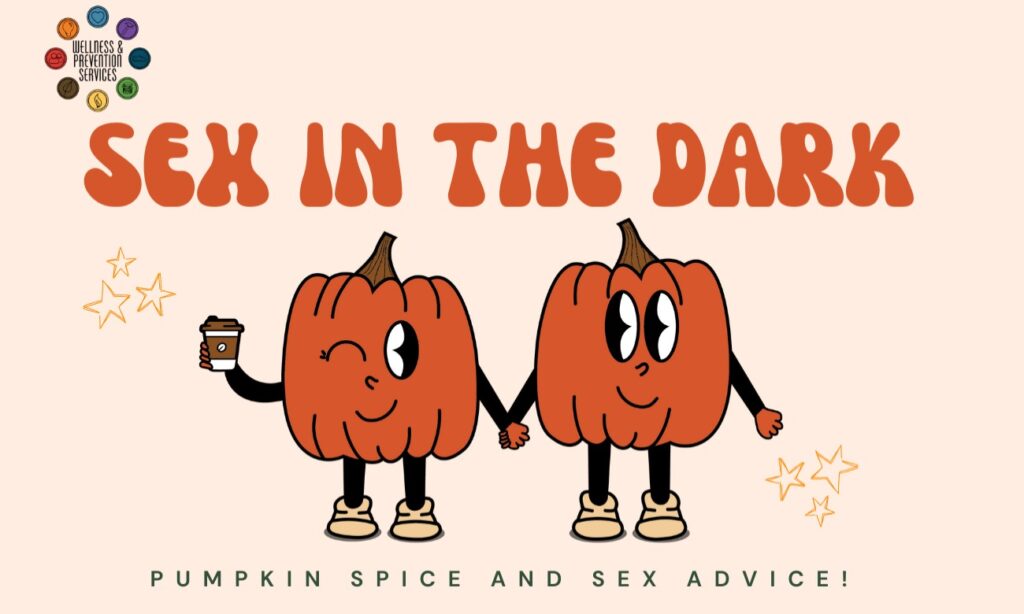
Others, however, veer into disturbing territory. Appalachian State, for example, hosts “Sex! In the Dark,” a “no-holds-barred event where students can ask all their burning questions about sexual health, relationships, and intimacy in a safe, judgment-free environment.” This leaves me wondering if they think some of these kids still don’t have the internet, or whether certain university employees just really enjoy publicly discussing taboo topics with barely-legal adults.
If you’re a Mountaineer who’s more into fashion, you can take part in “Project Condom,” where you can make a garment entirely out of condoms for a fashion show! Events like these show how far universities have strayed from their educational and civilizational missions. Rather than building knowledgeable citizens, they devote resources to increasingly taboo subjects, raising serious doubts about their judgment.
But not all the blame can be laid at administrators’ feet. University-sponsored student groups are more than capable of sponsoring salacious activities on their own. UNC-Charlotte’s Sex Week even made it into a 2022 Inside Higher Ed piece:
The student-run organization Sex Week at the University of North Carolina at Charlotte is hosting 11 events this week, including a do-it-yourself sex toy workshop—back by popular demand from last year—in which students can pick a toy mold and make their own sex toy using a silicone mixture.
As a student and a parent, it bothers me that it’s easier to find information from my institution on the mechanics of sex than it is to get clear instruction about what courses I have to pass in order to earn my degree. What does a university accomplish when it provides detailed information about sex but comparatively little on its educational requirements?
Indeed, these days, university health centers give perhaps the clearest guidance of any segment of the university, and with the least judgment. At UNC, you may end up in a class with one of the less patient professors who offers criticism of your work without offering any tips on improving, but if you are interested in medical gender transition, Campus Health is ready to assist you without judgment or even a mental health consultation:
“Hormone therapy is available through Campus Health using an informed consent protocol. This means there is no requirement for students to present a letter from a mental health professional in order to begin hormone therapy. The provider seen would perform an initial assessment, coordinate care, and provide secondary consultation if necessary.”
With so few safeguards, parents have good reason to wonder whether universities can be trusted with students being sent out into the world for the first time.
To be fair, there are different levels to the phenomenon of progressive sex propagandizing on campuses. Those of us who worked as resident advisors for University Housing at NC State in 2005 were exposed to more sexually explicit material than many of the residents for whom we designed programming because we were expected to deliver education about sexual diversity to our residents as one of the goals of progressive education.
This caused much anxiety for religious employees who felt that the university was pushing them to violate their consciences by promoting and attending talks by drag queens, showings of sexually explicit movies, and handing out condoms from their dorm rooms. The “privilege walks” we were forced to participate in during R.A. training, in which we were asked invasive questions like whether we had ever been sexually abused, often felt more like activities at a reeducation camp than training to welcome kids into the dorms. We all felt that dorms should be ideologically neutral places where students could leave behind their academic anxieties and get to know each other as people.
With so few safeguards, parents have good reason to wonder whether universities can be trusted with students being sent out into the world for the first time.But those of us who lived in that sweet spot of being too poor to pay for college without a job and too well-off to qualify for financial aid were at the mercy of University Housing, and simply tried not to look our parents directly in the eye when they asked how our jobs were going. We had no idea what we were consenting to when we accepted those jobs.
For those unfamiliar with the “try anything you want” sexual culture pushed by universities, its more salacious manifestations may be shocking. For those of us who have rolled our eyes at the constant drumbeat of “sex positivity” on campuses for years, it is mystifying that we don’t hear more horror stories. After all, no one ever really broaches the subject of whether there are things you shouldn’t consent to or how to think through what those might be.
But perhaps what is most shocking is the pearl-clutching by educators who provide porn-adjacent content to undergrads and then act surprised when they act out the very scenarios university officials put into their heads, with devastating consequences.
Rachel Suffern is a graduate student in history at UNC-Chapel Hill.
Author
Rachel Suffern