 Thomas E. Lee, Adobe Stock Images
 Some years ago, I saw in a friend’s kitchen a sign meant to place the house’s terms of engagement beyond dispute: “My dogs live here. The rest of you are just visiting.” Little did I know then that a bit of mass-produced kitsch could explain the higher-ed reformer’s central dilemma.
Consider this year’s attempt by the UNC System to bring its schools in line with Trump Administration anti-DEI guidance. As recent events make clear, that effort may fail precisely because the public’s representatives cannot possibly turn over every campus rock or smoke out every defiant faculty member. Why not? As my friend’s sign made clear, it’s a matter of standing. Recalcitrant professors and administrators “live” on campus. However well-intentioned, those charged with overseeing them are merely “visiting.”
The public’s representatives cannot possibly turn over every campus rock or smoke out every defiant faculty member. A bit of history may be relevant. In May of 2024, the UNC System Board of Governors replaced Section 300.8.5 of the UNC Policy Manual with a commitment to equality of opportunity and nondiscrimination. The old language, adopted in 2019, required not only the hiring of senior-level “diversity” administrators but a whole host of “strategies” and “goals” designed to spread DEI “throughout all levels and areas of [each] institution.”
Recalcitrant professors and administrators “live” on campus. Those charged with overseeing them are merely “visiting.” The new language, by contrast, demands that “diverse persons of any background … [be] invited, included, and treated equally” throughout the university system. No longer may faculty and staff presume to “speak on behalf of” the university, a rule meant to ensure institutional neutrality. Crucially, employees may no longer mandate “training” on “matters of contemporary political debate” (e.g., the nature and prevalence of racism in America).
Though the updated wording explicitly exempts what happens in UNC classrooms, President Trump’s executive order is less coy. As of January of this year, all universities receiving federal funds must “terminate all discriminatory and illegal preferences, mandates, policies, programs … and requirements” (emphasis added). Modern European History for all undergraduates? In. An equally obligatory course on the Perils of Whiteness? Out.
Whatever one thinks of Trump’s executive pronouncement, it is a serious blow to the classroom status quo. As the New York Times reported in February, a number of colleges are pledging to resist the order as an unconstitutional intrusion on academic freedom. (A legal case is currently ongoing.) Yet other institutions are treating Trump’s EO as an opportunity to do what ought to have been done years ago: strip from curricula the last vestiges of mandatory wokeness. Perhaps this second category of colleges would not have gone quite so far if not pushed, but they are willing enough to comply with a president on the right side of law, morality, and popular opinion.
The UNC System is in the latter camp. On Feb. 5, constituent schools were notified by memo that “mandatory curricular and program requirements on prohibited topics” would have to go. Though UNC chancellors could “approve, in writing, a tailored waiver … for individual major-specific requirements” (emphasis added), the schools’ general-education curricula would have to be cleansed.
Sadly, compliance with this directive has left something to be desired. On Feb. 10, UNC-Chapel Hill administrators sent a message to the campus community announcing that the institution would no longer maintain a “U.S. Diversity” requirement in its Making Connections general-education curriculum. Though significant at a glance, the move achieved little in practice, since Making Connections had already given way to a new gen-ed curriculum for students entering in fall ’22 or later.
As for the new core, IDEAs in Action, a Faculty Executive Committee statement filed the same day declared it to be “unaffected” by either the UNC System memo or (by implication) the Trump EO. Moreover, the statement harumphed, “the curriculum of the University of North Carolina at Chapel Hill is the responsibility of the faculty.” Administrators and their Trumpist overlords should take their supervision and stuff it.
As the Martin Center reported in April, all is indeed not well with the IDEAs in Action curriculum. Among the nine “focus capacities” from which undergrads must choose classes was, until recently, “Power, Difference, and Inequality,” a module whose DEI theme couldn’t be more blatant.
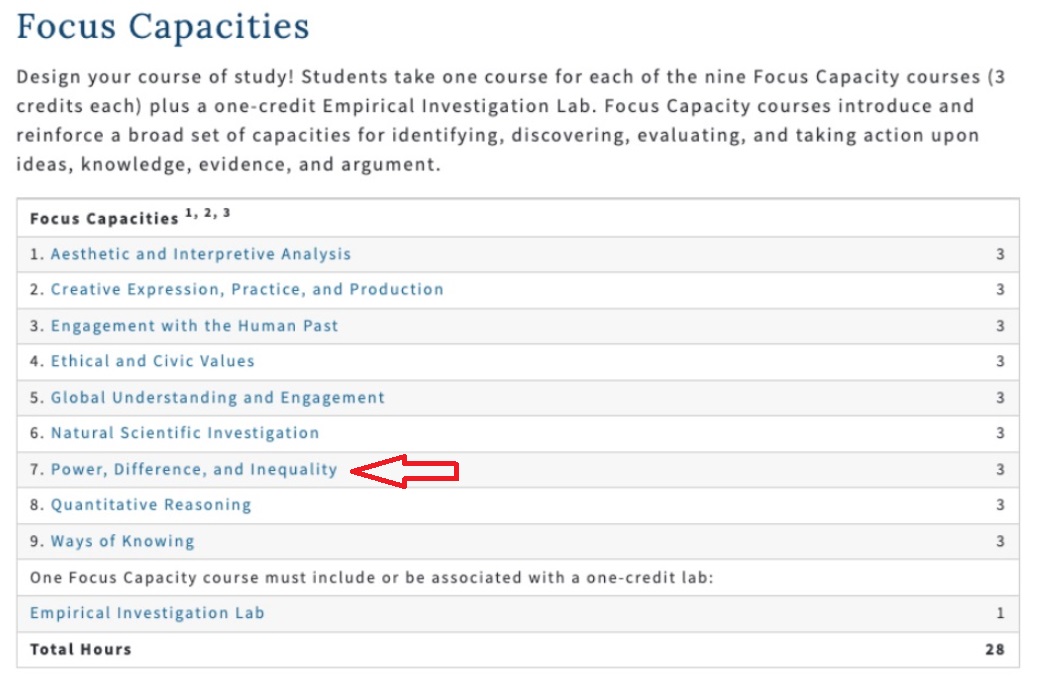
Nor did examination of such course options as “Global Whiteness” (GLBL 383) and “Queering China” (CHIN 480) reassure, particularly since nearly all of the 400 or so choices available to students in the module had a clear leftist-“diversity” slant.
The Martin Center’s verdict at the time seems to have struck a nerve. The Daily Tar Heel reported in May that “Power, Difference, and Inequality” would henceforth be reimagined by the university as “Power and Society,” a slightly less obnoxious formulation. Altered, too, were the module’s “student learning outcomes,” a list of mostly ignorable assessment standards. Yet, unsurprisingly, these cosmetic changes will have next to no impact in the classroom. Gay Asians and white villains remain on the “Power and Society” course list, as do hundreds of other options that approach the world from a particular, slanted point of view.
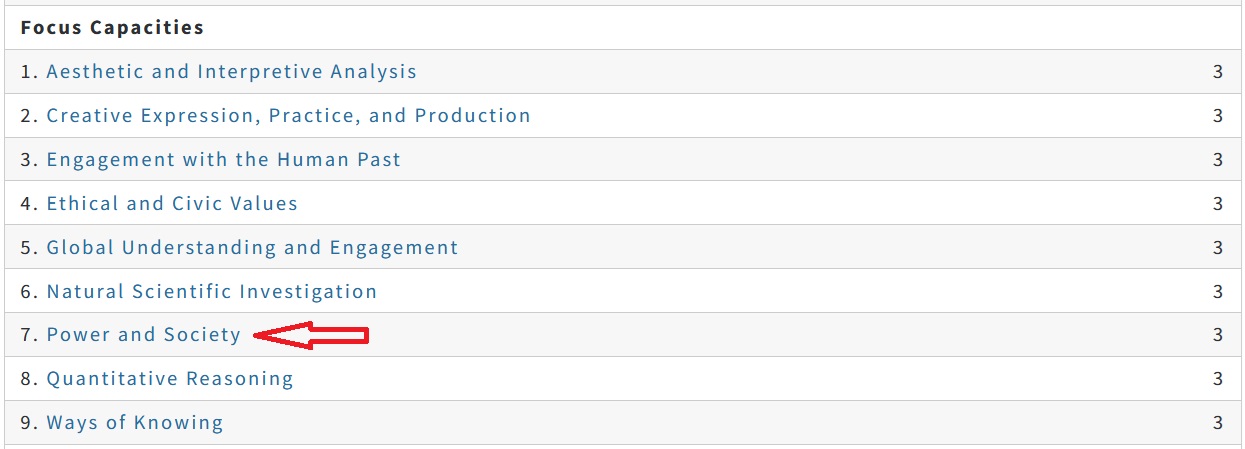
Professor Lauren Jarvis of the history department helpfully gives away the game, telling the Daily Tar Heel that the new module title “will not change what she covers in [her] course.” No matter what we “visitors” say, Jarvis and her charges “will continue to wrestle with thorny questions about power and authority in a deeply divided, unequal society.” Why should they not? If a mere name-change is enough to throw the System and the Trump Administration off the scent, then reformers don’t deserve to come out victorious.
If a mere name-change is enough to throw the System and the Trump Administration off the scent, then reformers don’t deserve to come out victorious. And what about other UNC institutions, where, in recent weeks, staff have been outed for surreptitiously continuing their DEI activities despite instruction to the contrary? As reported by Inside Higher Ed and other outlets, the conservative advocacy group Accuracy in Media (AIM) spent part of this spring secretly recording employees at UNC Charlotte, UNC Asheville, UNC Wilmington, and Western Carolina University. At each college, officials bragged about their ability to ignore the DEI ban and continue regular indoctrination apace.
DEI will end on campus at the exact moment when DEI is stricken from full-time employees’ hearts. Though several of the employees in question have since been terminated, their boasts still ring out. “We do work that is covert.” We “love breaking rules.” We’re “trying to be a little sneaky.” If these are the kinds of people being hired, does anyone believe that no more bad apples remain in the barrel?
Plainly, the Board of Governors doesn’t. On June 17, Chairwoman Wendy Murphy and Committee on University Governance chairman Alex Mitchell sent a new memo to all UNC System boards of trustees directing them to submit “meaningful verification” that the 2024 anti-DEI policies have been implemented. Among the required material is information on “what safeguards exist to ensure an employee’s previous [DEI] responsibilities do not continue in [his or her] present role.” Moreover, the Board of Governors wishes to be made aware of “any disciplinary action taken against personnel” who flout the new rules. At least UNC Charlotte et al. will have a good answer to that question.
Though exceedingly welcome, this latest effort to bring university staff under public control will likely amount to little. Administrators will give trustees and governors just enough to make them go away, and that, at least for the time being, will be that. To put it another way, DEI will end on campus at the exact moment when DEI is stricken from full-time employees’ hearts—and no sooner.
Good luck with that.
Graham Hillard is editor at the James G. Martin Center for Academic Renewal.
Author
Graham Hillard